
Traveller wants a tropical beach but has limited days and budget
A short trip with a fixed budget rules out most of the islands that fill 30-item bucket lists. The math is simple: every hour spent flying is an hour not spent on a beach, and every long-haul segment adds a fare premium that has nothing to do with the destination itself.
Long-haul options such as French Polynesia, the Maldives, and most of Southeast Asia's island coasts sit much farther from US gateways than the Caribbean, and the routing usually involves at least one connection rather than a direct flight. That distance adds hotel-adjacent costs before the trip even starts: a night near a connecting airport, meals in transit, and the fatigue that eats into the first beach day.
The Caribbean solves both problems for US-based travellers. Islands such as Puerto Rico, the Dominican Republic, and the Bahamas sit within a short flight window from major East Coast gateways, a distance covered repeatedly in roundups of quick beach getaways from the US mainland, including a list of seven easy beach vacations reachable without long-haul flying. Shorter flights mean lower fares, less lost vacation time, and no need to budget for a stopover night.
That saved money doesn't have to vanish into the general trip budget — it can be redirected into a better resort tier instead. A traveller who cuts the fare premium and layover costs of a long-haul routing can put the difference directly toward an oceanfront room or an all-inclusive upgrade rather than a standard inland unit. The practical filter, then, is not "which island looks best in photos" but "which islands are reachable within my time and flight budget," and only after that filter narrows the list does resort comparison make sense.
Advertised tropical prices vary widely by month

The same destination can be markedly cheaper or more expensive depending on when it's booked, because tropical pricing follows the calendar as closely as it follows the map. Peak winter months, when travellers from colder climates book to escape snow, push room rates and airfare to their highest points of the year.
Season also carries a weather risk that most listicles skip. The window when tropical storms and hurricanes are most likely to affect Caribbean and Gulf destinations runs across the back half of the year, and booking inside that stretch without checking a forecast can mean a beach trip disrupted by a storm system, not just a cheaper rate.
The shoulder period — roughly late spring and early winter, before the December surge — tends to offer a middle ground: lower demand than peak season, but before or after the highest storm risk. Rooms and flights priced for these weeks are consistently lower than the same product sold in December or February, a pattern acknowledged in roundups aimed specifically at affordability, such as coverage of the most affordable tropical destinations, which frames cost as a function of timing as much as location.
This matters because it answers the "cheapest tropical place" question without asking a traveller to trade down to a less desirable island. A destination that reads as expensive in a January search can be the same destination at a materially lower price if the dates shift six to eight weeks. Cost, in other words, is often a scheduling decision, not a destination decision.
Reader's stated goal is snorkeling, not just sunbathing
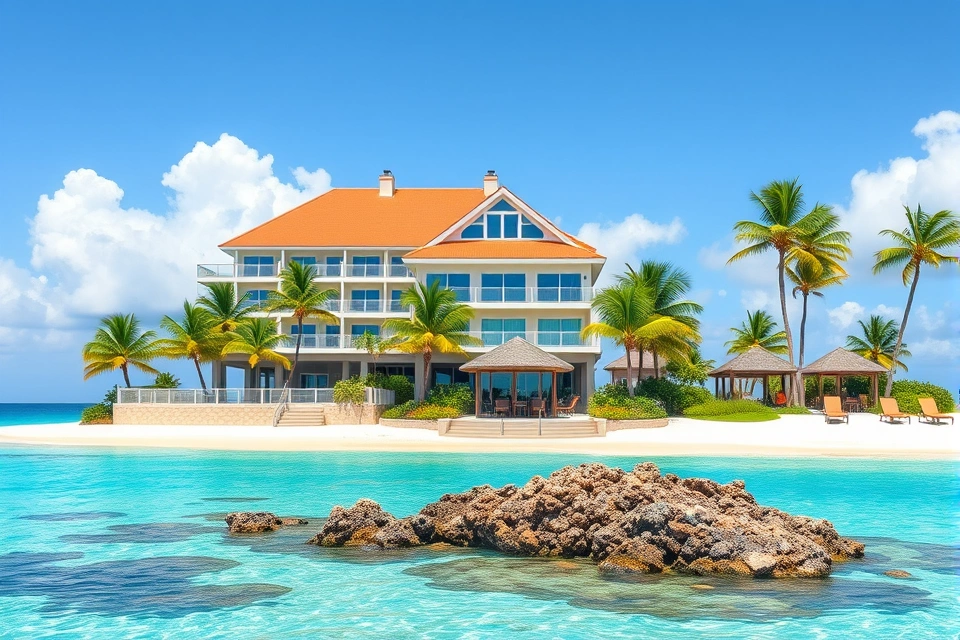
If snorkeling is the actual goal, beach photos are the wrong selection criterion. A photogenic stretch of sand tells a traveller nothing about what's happening offshore — snorkeling quality depends on a living reef system, water clarity, and consistently warm temperatures, none of which show up in a beach photo.
That means the useful filter is a named reef system, not a named beach. Reef structures that support visible fish life and clear water are concentrated in specific zones, and destinations near Belize, parts of the Bahamas, and the Virgin Islands come up repeatedly in broader tropical-destination coverage that flags reef proximity as a differentiator between otherwise similar beach towns, including the 12 best tropical island vacations roundup.
Lodging choice follows from this. A beachfront resort with a stretch of open sand is not the same product as a resort with direct reef access — some properties sit adjacent to a reef and offer short boat rides or shore entry to snorkel sites, while others are miles from the nearest reef and require a paid excursion to reach one. A traveller booking for snorkeling should be checking the property's proximity to a named reef and its access arrangement (shore entry, boat transfer, guided tour) before checking room photos. Conflating "pretty beach" with "good water activity" is the single most common mismatch between what a resort markets and what a snorkeler actually needs.
PAA asks which tropical country is safest
Safety in tropical travel is a country- and district-level question, not an island-appeal question, and it can't be answered by a scenery ranking. The islands that photograph best are not necessarily the same ones that carry the lowest travel-safety concerns, because these are different axes of information entirely.
The practical way to check is to look up conditions at the country level before booking, rather than relying on a destination's general reputation, and to note whether risk is described as concentrated in specific regions or spread across the country as a whole — a distinction that matters for islands where the tourist zone and the wider country carry different risk profiles.
That distinction should drive a practical decision: whether the trip stays inside a resort-bounded footprint (all-inclusive property, arranged transfers, minimal independent movement) or involves independent travel around the island or country. A resort-bounded trip reduces exposure to conditions outside the higher-risk areas noted for a given country; independent travel means checking the district-level detail rather than the country's headline profile alone. Neither approach is inherently safer — the choice should match the traveller's actual plans, checked against current country-level information rather than against a destination's reputation.
Resort
Resort is the unit almost every tropical-destination list organizes around, and it deserves separate scrutiny from the destination itself. Two properties on the same island, even the same beach, can differ enormously in what's included, and "resort" alone says very little.
All-inclusive pricing bundles meals, some drinks, and sometimes activities into a nightly rate, which is the model built out extensively across the Caribbean by chains covered in dedicated roundups of Caribbean tropical vacations. The appeal is predictability — a traveller knows most of the daily cost before arrival — but the trade-off is that the nightly rate is higher than an equivalent room-only booking, and the value depends on how much of the included food and activity a traveller actually uses.
A non-inclusive resort or independent hotel, by contrast, keeps the nightly rate lower but shifts meal and activity costs to a per-item basis, which can be cheaper for travellers who eat out modestly and don't drink much, or more expensive for those who'd otherwise use several included excursions and bar tabs a day. There's no universally cheaper model — it depends on how the traveller would actually spend the days.
Tropical island destination
An island is not interchangeable with the country it sits in, and that distinction affects both cost and logistics. Some islands, like Aruba or Puerto Rico, are compact enough that airport-to-resort transfer takes well under an hour; others, described across long lists of bucket-list tropical islands, require inter-island flights or ferries after the international arrival, adding a transfer cost and a travel day that doesn't show up in headline airfare comparisons.
Entry requirements also vary by island rather than by region, and they should be confirmed against current government guidance for the specific island before booking rather than assumed from a neighboring destination's rules. Checking entry requirements per specific island, not per region, avoids a last-minute problem that a beach-focused list won't flag.
Caribbean
The Caribbean's dominance in short-trip planning comes down to flight time, not superior beaches. Its position within a short flight band from most US East Coast and Gulf Coast airports is what repeatedly puts it ahead of Pacific or Indian Ocean alternatives in roundups aimed at quick, lower-cost beach trips, including the seven easy beach vacations list built specifically around that criterion.
That said, "the Caribbean" spans dozens of countries and territories with different currencies, safety profiles, storm exposure, and price tiers — a Caribbean trip in the Bahamas is not priced or timed the same as a Caribbean trip in the Dominican Republic or Aruba. Treating the region as a single answer to "cheapest tropical vacation" skips the country-by-country variation that actually determines the final cost.
Coral reef
Reef quality is the variable that separates a beach vacation from a snorkeling or diving vacation, and it's worth checking specifically rather than assuming any tropical beach has one nearby. Reef systems require particular water temperature and clarity conditions to stay healthy and visibly active, and not every appealing beach sits near a healthy reef.
Where a named reef system is mentioned in destination coverage — the reef zones around Belize and parts of the Bahamas come up most often in broader tropical roundups such as the 12 best tropical island vacations list — it's worth checking current condition reports rather than assuming permanence, since reef health can change year to year with warming events and storm damage.
Luxury hotel
The luxury tier exists on nearly every island covered in tropical-destination roundups, and it's priced as a separate product from the standard resort tier rather than as a marginally nicer version of it. Higher-end properties typically add private pools, beachfront villas rather than standard rooms, and a higher staff-to-guest ratio, which shows up as a meaningfully higher nightly rate rather than a small premium.
Whether that premium is worth paying depends on what a traveller actually uses. A short trip focused on snorkeling and casual beach time draws little added value from a villa's private plunge pool; a trip built around in-room dining and privacy gets more out of it. Matching hotel tier to how the days will actually be spent avoids paying luxury pricing for standard-resort behavior.
Start by fixing three things before comparing any island by name: the flight-time ceiling that fits the trip's length, the month (checked against both price and storm-season timing), and whether the goal is beach time or reef access — since that answer changes which resort, and even which island, actually fits.