
Traveller wants a tropical beach but has limited days and budget
A short list of Caribbean islands reachable on a direct flight from the US solves this faster than a long scenery list does. The constraint that matters most isn't which island has the prettiest sand — most of the Caribbean clears that bar — it's how many of a traveller's limited vacation days get eaten by travel itself.
Long-haul tropical options (the South Pacific, parts of the Indian Ocean) routinely add a full travel day on each end once connections are counted. That's two days of a seven-day trip spent in transit before any resort math even starts. The Caribbean's advantage is geographic: islands like the Bahamas, Turks and Caicos, and the US Virgin Islands sit close enough to US gateways that several are reachable in roughly three hours or less from the East Coast, which is closer to a domestic flight than an international one in practice.
That proximity does two things to a budget trip:
- It converts a travel day into a beach day — arrive mid-morning, be in the water by afternoon.
- It lowers the airfare itself, since shorter routes with more carrier competition tend to undercut long-haul fares to more remote tropical regions.
The money saved on flights is the money that should move to the resort tier, not get spent evenly across a longer, more complicated itinerary. That resort tier itself splits into two distinct products rather than a single sliding scale. A budget-oriented all-inclusive typically bundles basic buffet dining, a shared pool deck, and standard rooms at a flat nightly rate, while a luxury property on the same island charges a premium for private or adults-only sections, à la carte restaurants instead of buffet rotation, and a higher staff-to-guest ratio — the kind of difference that shows up in service speed and room privacy more than in the beach itself, since both tiers often sit on the same stretch of coastline. A traveller choosing between a mid-range all-inclusive on a short-flight island and a budget room on a long-haul one is often paying similar totals for very different experiences — the difference is just where the dollars land, and which tier they land on. For someone with five to seven days total, narrowing first to islands with direct flights, then picking a resort tier within that shortlist, produces a better trip than ranking islands on looks and hoping the logistics work out.
Advertised tropical prices vary widely by month
The same resort can cost noticeably more or less depending on the week booked, and that swing is usually bigger than the difference between a budget island and a luxury one. Season is the variable driving this, and it affects both the weather a traveller actually gets and the rate charged for the room.
Caribbean high season clusters around the northern winter, when travellers from colder climates book in volume to escape winter weather — a pattern that resort guides for the region describe as the period driving both occupancy and room-rate peaks in destinations like the Bahamas. Hurricane season sits opposite that peak: the Atlantic storm window runs roughly from June through November, which is also the stretch when many island resorts drop rates to keep occupancy up against the added risk of itinerary disruption. A traveller booking blind by destination name alone, without checking where in that calendar the trip dates fall, is gambling on both price and weather at once.
The shoulder periods — late spring and early winter, just outside the storm-risk core and before peak holiday pricing locks in — tend to keep most of the usable beach days while avoiding the top of the rate curve. This is also how a cheap trip and an expensive trip can be the exact same island: the destination doesn't change, only the calendar does. A reader asking which tropical place is cheapest is often asking the wrong axis of the question — the more answerable version is which weeks, on an island already on the shortlist, are priced lowest without raising weather risk past what's acceptable. That reframes affordability from a property of the island to a property of the booking window.
Reader's stated goal is snorkeling, not just sunbathing
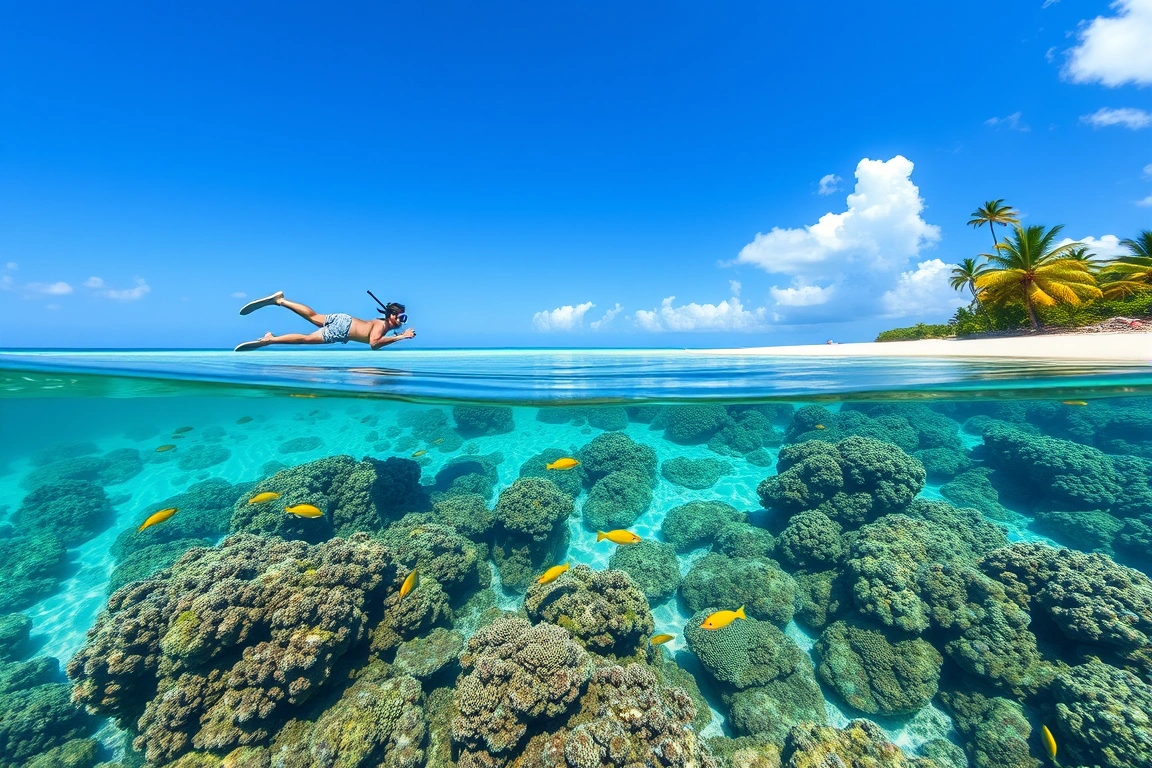
If snorkeling is the actual goal, the beach photo on a listicle is the wrong selection criterion. What determines a good snorkeling trip is a living offshore reef and consistently clear, warm water — neither of which is guaranteed by sand quality or a resort's marketing images.
This is where "best beach" and "best water activity" destinations genuinely diverge, something scenery-led rankings tend to blur by using reef and beach language interchangeably. A beach can be visually striking — pale sand, turquoise shallows — while the reef offshore is degraded, distant, or accessible only by boat excursion rather than a walk-in entry. Conversely, some less photogenic beaches sit directly adjacent to healthy reef structure.
Two practical filters separate the two goals:
| Priority | What to check | What it rules in/out |
|---|---|---|
| Sunbathing / scenery | Sand colour, water clarity from shore, resort beachfront photos | Most well-marketed Caribbean beaches qualify |
| Snorkeling | A named reef system close to shore, water depth and visibility at the entry point | Narrows to specific coastlines, not whole islands |
The British Virgin Islands are a useful example of the second category: operators there build entire itineraries around named beach and reef sites rather than a single resort strip, because the water activity — not the sand — is the draw. That distinction should change where a traveller books, not just what they pack. A resort chosen for beachfront alone may require a boat transfer to reach any real reef; a resort chosen with reef access in mind puts the activity within swimming distance of the room. For a trip built around snorkeling, lodging selection should follow the reef map, and the beach photo becomes a secondary consideration rather than the deciding one.
PAA asks which tropical country is safest
Safety in the Caribbean is a country- and area-level question, not an island-beauty-contest question, and that's a different kind of research than scrolling a top-10 list. A resort can sit inside a well-run, heavily touristed zone even in a country with areas a traveller would otherwise avoid venturing into independently — the two facts don't contradict each other, but a scenery-ranked list has no reason to mention either.
The practical approach is to treat "is this island safe" as two separate checks:
- Look at destination-level travel advisories for the specific country, not the region as a whole — conditions vary considerably between neighboring islands and even between areas of the same island.
- Separate the resort-bounded zone from the wider island. Many all-inclusive properties operate in gated or heavily patrolled tourist corridors that carry different on-the-ground conditions than areas outside that perimeter.
That second check determines what kind of trip actually fits. A traveller planning to stay within a resort property for the whole trip is making a different safety decision than one planning day trips into town, excursions to unaffiliated beaches, or independent transport between the airport and the resort. Entry practicalities compound this: passport validity requirements, whether a visa or simple tourist card is needed, and how currency and local transport work between the airport and the island are all things a resort-bound itinerary can mostly sidestep, while an independent-travel itinerary cannot.
None of this produces a single "safest Caribbean island" answer, because the honest version of that question is really "safest for what kind of trip." A traveller who wants a resort-contained week has a shorter, simpler safety check than one planning to island-hop or explore independently — and that's the decision to make before booking, not after arriving.
Next steps
Start from the two constraints that actually narrow the field — flight time from a home airport, and whether the trip is reef-focused or beach-focused — then check the calendar for the booking window before comparing resort tiers. That order gets to a workable shortlist faster than ranking islands by photograph.