
Is it safe to travel to the Maldives right now?

Yes — the Maldives is generally considered a safe destination for tourists, and the practical safety questions that matter for a trip are less about crime and more about weather, water, and the layout of the country itself.
The Maldives is a nation of roughly 1,200 coral islands spread across the Indian Ocean, and most visitors never set foot on a populated local island at all — they fly into Velana International Airport near the capital, Malé, then transfer by speedboat or seaplane directly to a resort island. That structure matters for safety in a way most tropical-destination round-ups skip over: a resort-bounded trip and an independent trip through inhabited local islands are two different risk profiles, not one. On a resort island, the operator controls food safety, lifeguard coverage, boat transfers, and medical evacuation arrangements. On a local island — increasingly an option since guesthouses opened to tourism — a traveller is dealing with the same considerations as any inhabited but rural island: uneven transport schedules, limited emergency care, and local customs that carry more weight than they do on a resort island where staff work to international hospitality norms.
The two things worth checking before booking, rather than after landing, are the destination's official government guidance for your home country and the country-level entry rules published by the Maldives itself. The Maldives runs its own official tourism site, Visit Maldives, which publishes entry requirements, health notes, and the current status of any restrictions — it's the primary source for anything that could have changed since a blog post was written, and it's a better first stop than a listicle ranking beaches. Cross-check that against your own government's travel advisory rather than a travel blog's summary of one, since advisories are updated on a different schedule than tourism marketing and are the only source that will flag a specific area or period as higher-risk.
Water and weather are the real variables
Almost every safety issue a Maldives traveller actually runs into is water- or weather-related, not crime-related: rip currents on house-reef edges, boat-transfer conditions in rough seas, and storm timing. That's a season question as much as a safety question, and it's covered in the next section — but it's worth stating plainly here: asking "is the Maldives safe" without asking "safe in which month" is asking half the question.
When to go: season drives both price and whether the trip works at all

Advertised Maldives prices swing by season far more than most tropical-destination content admits, and the swing tracks the monsoon pattern, not marketing. The Maldives sits close to the equator, so temperatures stay warm year-round, but rainfall and wind are split into two clear monsoon periods that resort websites and travel guides both flag as the operative variable for trip planning — Lonely Planet's Maldives guide lays out the dry, north-east monsoon season roughly from December through April as the period of calmer seas and lower rainfall, against a wetter, windier south-west monsoon for the rest of the year.
That split explains why the same overwater villa can be quoted at wildly different nightly rates depending on the month a reader searches, something Nomadic Matt's budget breakdown of the Maldives treats as central to planning rather than incidental: booking in the shoulder period around the edges of the dry season — rather than at its peak — keeps calmer water and workable beach days while avoiding the highest room rates. The destination doesn't need to change to become cheaper; the calendar does.
| Period | Typical conditions | What it means for booking |
|---|---|---|
| Peak dry season (roughly Dec–Apr) | Calmest seas, least rain, highest demand | Highest resort rates, book well ahead |
| Shoulder weeks at either edge of the dry season | Still mostly calm, rain risk rising slightly | Lower rates than peak, similar usable beach time |
| South-west monsoon months | More wind and rain, rougher boat transfers | Lowest resort rates, higher chance of disrupted days |
The trade-off isn't just comfort — a windier month can mean rougher speedboat transfers between the airport and a resort island, which is where the safety and cost questions actually meet. A cheaper booking in the wettest weeks can mean a genuinely rougher transfer day, not just a rainy afternoon on the beach.
That season-driven price swing is also the honest answer to why a Maldives trip costs so much more than a comparable Caribbean beach trip, once flight time is factored in alongside the room rate. A Caribbean island with a direct flight from a US gateway saves both the connecting-flight time and cost that a Maldives trip requires — Budget Maldives' own routing guide confirms there's no nonstop US service to Malé, so every dollar and hour spent on that connection is a dollar and hour the Caribbean alternative doesn't need. The two destinations aren't interchangeable on scenery grounds alone; a traveller weighing "tropical beach, limited days, limited budget" is really weighing flight access against reef quality, and the Maldives only wins that trade for someone who has already decided the reef and the overwater villa are worth the extra travel.
If the goal is snorkeling, the reef matters more than the beach photo
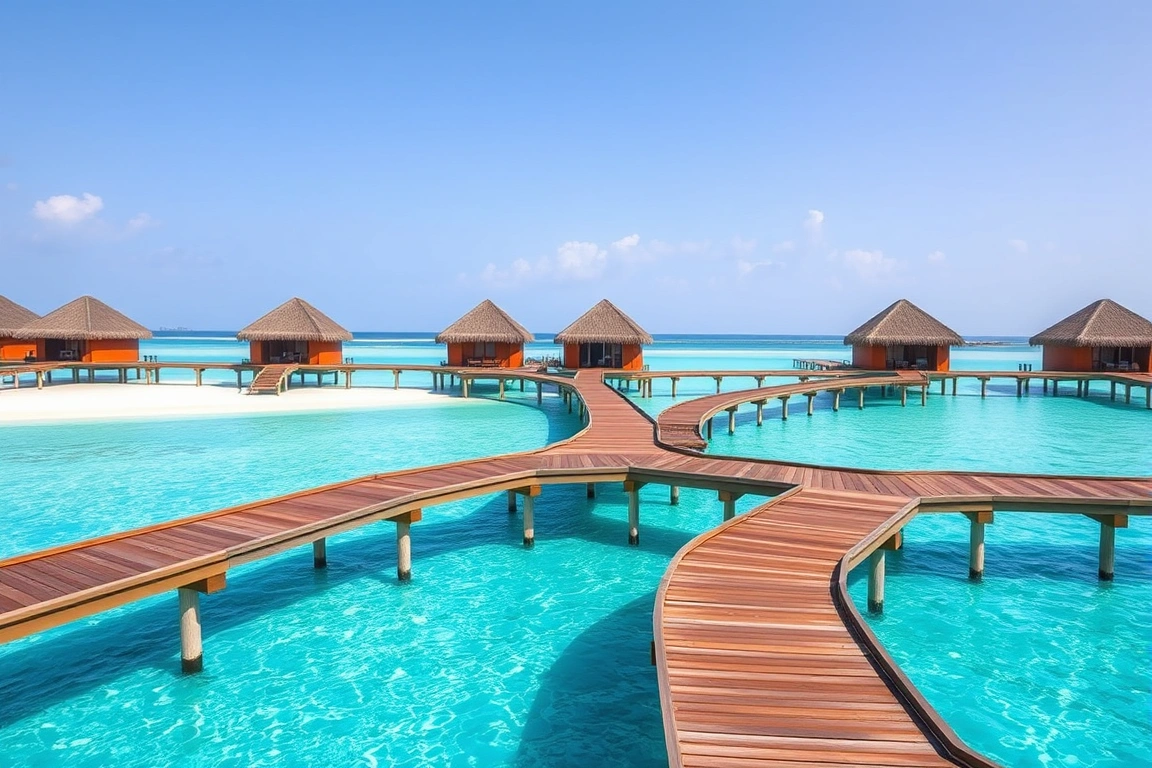
A beach that photographs well and a reef that's worth snorkeling are not the same filter, and treating them as one is the most common planning mistake in Maldives research. Good snorkeling depends on a living, intact reef close to shore and clear, warm water with reasonable visibility — not on sand colour or how empty a beach looks in a photo. The Maldives' resort model actually makes this easier to check than in most destinations, because almost every resort is built around a specific house reef, and the quality of that reef is knowable before booking rather than a surprise on arrival.
Visit Maldives and general guides such as the Handluggageonly Maldives guide both point to the country's location on a series of atolls with extensive coral coverage as the reason snorkeling and diving are treated as a primary activity rather than an add-on — but reef condition varies island to island, affected by past bleaching events and by how close a resort's jetty and boat channel sit to the reef itself. Two questions are worth asking before booking:
- Does the resort's own site describe a house reef reachable by swimming from the beach, or does snorkeling require a boat trip to a separate site?
- Is the reef described as within swimming distance of the room type being booked, since overwater villas and beach villas often sit at different distances from the reef edge on the same island?
A resort chosen for its beach alone can still deliver poor snorkeling if its house reef was cleared for a boat channel or damaged in a past bleaching event; a resort chosen specifically for reef access tends to publish that fact clearly, because it's a selling point operators know divers and snorkelers check for.
Entry practicalities: passport, visa, currency, and getting to the resort island
Most nationalities, including US travellers, can enter the Maldives without arranging a visa in advance — a visa is issued on arrival for a set period, which is the detail that actually matters for planning rather than the word "visa-free" alone. Budget Maldives' guide to travelling from the US walks through the practical chain: no US carrier flies nonstop to Malé, so the route runs through a connecting hub — commonly in the Middle East or South Asia — before a final flight into Velana International Airport, and that connection is usually the single largest chunk of total travel time on the trip.
From the airport, the resort, not the traveller, usually arranges the final leg: a speedboat transfer for islands close to Malé, or a seaplane for islands further out. That seaplane leg is worth pricing separately before booking, since it's often quoted per person and can add a meaningful amount to the total cost of a stay, a detail resort marketing pages tend to understate against the nightly room rate.
Currency and dress norms are the other two practicalities travellers ask about and rarely find answered plainly:
- The local currency is the Maldivian rufiyaa, but resorts operate almost entirely in US dollars for bills and transactions, so carrying local currency is rarely necessary on a resort-only trip.
- On resort islands, swimwear including shorts and bikinis is standard and expected; on inhabited local islands, the Maldives is a Muslim country and modest dress — covering shoulders and knees away from designated "bikini beaches" — is the expected norm, which is the practical answer to whether women can wear shorts there: yes on resort islands, with more coverage expected on local islands outside marked tourist beaches.
The resort model: what "affordable" and "luxury" actually mean per night
Nearly every Maldives itinerary is built around a single resort island for the length of the stay, and that structure is why "affordable" and "luxury" get used so loosely in Maldives content without ever being tied to a number. A resort here isn't a hotel in a town with other things nearby — it's the entire island, and the price of a night there includes the transfer, the meal plan, and often the water activities, bundled in a way that makes a straight nightly-rate comparison misleading unless the inclusions are stated too.
The practical range breaks down less by "beach quality" — the axis most listicles rank on — and more by three factors that actually move the price:
- Room type: overwater villas cost meaningfully more than beach villas or garden rooms on the same island, for the same reef access.
- Meal plan: many resorts default to half-board or full-board, and some quote room-only rates that look cheaper until meals are added back in at resort prices.
- Distance from Malé: islands close to the capital use a shorter, cheaper speedboat transfer; islands further out require a seaplane transfer priced separately, which changes the real total cost even when the nightly room rate looks similar.
Guesthouse stays on local islands are the main lower-cost alternative to the all-inclusive resort model, and both Nomadic Matt and general guides such as US News' Maldives travel guide treat this as the real budget lever in Maldives planning — a guesthouse on a populated island can cut the per-night cost sharply, at the trade-off of a less private beach setup and a need to book activities and boat transfers separately rather than as a bundle. That's the honest version of "affordable Maldives": not a cheaper resort island, but a different lodging category altogether, chosen deliberately rather than assumed.
Before booking, it's worth deciding which trip actually fits the traveller: a single resort island for the whole stay, simpler to plan and safer in the narrow sense of controlled transfers and food, or a mix of local-island guesthouse stays, cheaper but requiring more of the entry, currency, and dress-code homework covered above. Once that choice is made, the season table and the reef-access questions above are the two checks that turn a marketing page into a bookable itinerary.